
Dark fiber was supposed to be a mistake.
Carriers buried far more of it than the internet needed in the late 90s, then spent twenty years carrying it as stranded capacity on the balance sheet. Written down. Regretted.
Then Verizon sold more than a billion dollars of it to Google.
The deal connects Google's AI data centers, and it tells you where the AI buildout is heading next. Everyone has been watching GPU allocations and power contracts. The quieter constraint is the glass between the buildings. Training and inference move enormous datasets between facilities, and that traffic needs its own private, low-latency lanes. You cannot spin those up on demand. Either the fiber is already in the ground on the route you need, or it isn't.
What Verizon sold
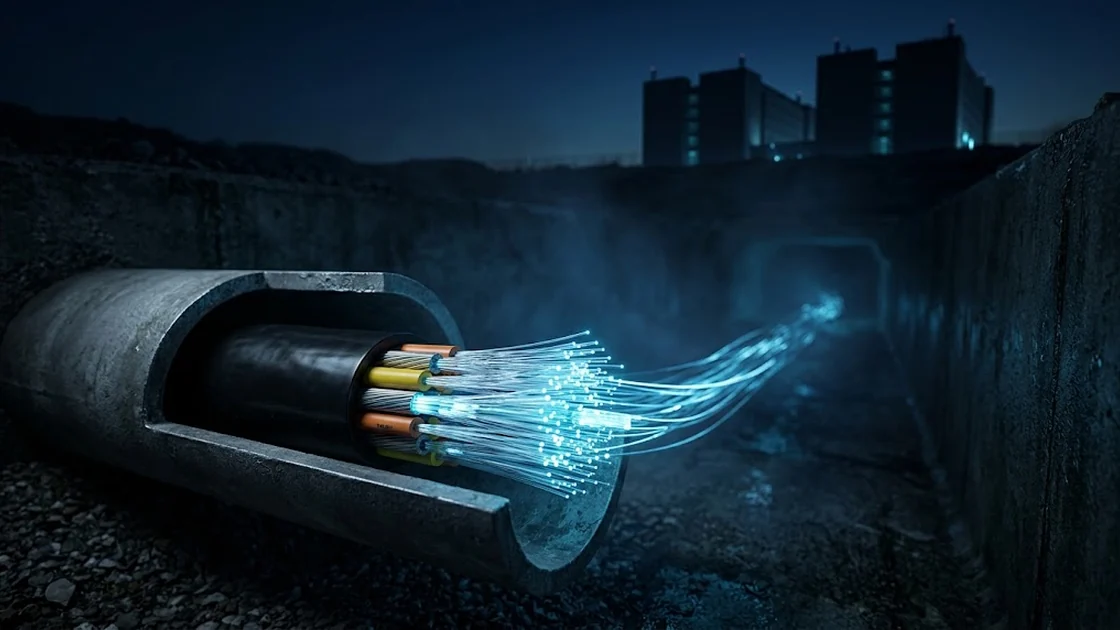
Dark fiber is installed strand with no light running through it. The carrier sells the physical path, and the customer lights it with their own equipment. For a hyperscaler that beats raw bandwidth, because it buys dedicated capacity and full control over the network design.
Dan Schulman disclosed the agreement on Verizon's second-quarter earnings call in July, putting it at well in excess of a billion dollars to use Verizon dark fiber to connect Google's data centers. He treated it as an opening rather than an event, with more deals expected by year end, together worth multiple billions in revenue over the coming years.
Then he said the line worth keeping. The buildout of AI infrastructure across the United States, in his words, is one of the largest capital cycles of our lifetime.
Twenty years of being wrong about an asset
That flips the story on the carriers. For a decade the narrative was managed decline: shrinking voice, commoditized data, defending a dividend. Analysts treated the fiber in the ground as a sunk cost from an era of bad judgment, maintained because ripping it out cost more than leaving it alone.
Investors now price those same companies as the interconnect layer for the hyperscalers. Nothing about the asset changed. A buyer showed up who needs that specific path, between those specific buildings, and cannot wait three years for permits and trenching.
Scarcity arrived in something everyone had filed under abundant, and no production response exists. You cannot manufacture a right-of-way between two points on a timeline that suits a buyer. The inventory that exists is the inventory that exists.
The constraint keeps moving down the stack
In an AI cycle, the binding constraint keeps moving down the stack, and founders should sit with where it has landed.
Chips came first, when everything hinged on GPU allocation. Power came next, and the conversation shifted to interconnection queues and turbine lead times. Now it is the glass between the sites.
Each move lands on something less glamorous and more permanent than the last. Chips are a manufacturing problem, and manufacturing responds. Power is a regulatory and equipment problem, slower but solvable. Fiber on a named route is a land problem, and land ignores capital on any schedule a buyer would choose.
The winners are whoever already owned the boring asset before it got scarce, often for reasons that looked like an error when they bought. Spotting the trend pays less than holding the position.
The question that follows
We spend our time in the part of this market nobody writes about: the independent operators who own last-mile networks in places the national carriers skipped. Different layer, same structure. Someone built physical infrastructure in a location no one can replicate, and demand sets the value of that position years later, on a schedule the owner never controlled.
Who owns the routes that matter, and are they priced like it yet?
General commentary on infrastructure markets. Not an offer to sell or a solicitation of an offer to buy any security, and not investment advice.